
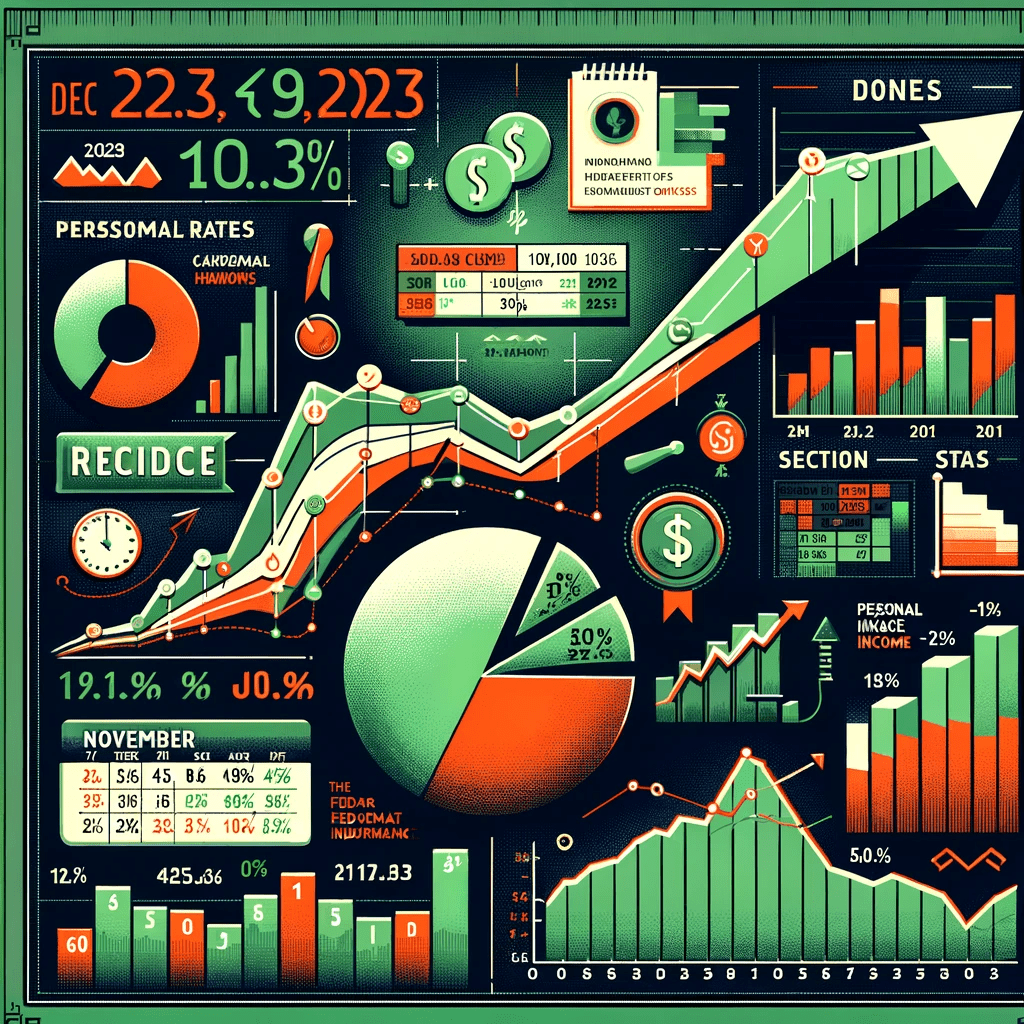
Performance of Major Indexes: As of December 1, 2023, U.S. stocks ended mostly higher with the Dow Jones Industrial Average recording its highest close since January 2022. The S&P 500 registered gains, particularly in sectors like consumer staples, industrials, healthcare, and financials. The Nasdaq, however, experienced a slight decline. This performance was partly driven by data showing a further cooling of inflation in October.
Inflation and Economic Data: The easing of inflation has been a significant factor. Core Personal Consumption Expenditure, which excludes food and energy prices, rose by 3.5% year-over-year in October, a decline from September’s 3.7%. Additionally, personal income and spending both increased by 0.2% in October. Jobless claims also rose slightly, suggesting some shifts in the labor market.
Monthly Performance: For November, the Dow gained 8.9%, breaking a three-month losing streak. Similarly, the S&P 500 and the Nasdaq posted significant gains, with the Nasdaq jumping 10.7%, marking their biggest monthly gains since July 2022.
Technical Challenges and Market Rally: As of the latest updates, the stock market rally is facing its first technical challenge. The Nasdaq Composite nearly erased its biggest opening deficit since October, and the Dow eked out small gains. There’s a note of caution regarding the sustainability of a bull market led by tech, suggesting that any rally in tech stocks could be fast, furious, and short-lived. Key levels to watch are the upper ends of current ranges for major indexes like the S&P 500, Nasdaq, and the Dow.
Latest Market Movements: On December 1, 2023, U.S. stocks continued to rise, with the S&P 500 hitting a new 2023 closing high. This rise was despite Federal Reserve Chair Jerome Powell’s cautionary remarks on rate hikes, suggesting it’s premature to conclude that the rate hikes are over. Despite this caution, the market appeared optimistic, pushing ahead and interpreting Powell’s remarks positively. Additionally, there was a decline in oil prices after OPEC+’s additional output curbs failed to convince investors, affecting energy sector dynamics.
These various factors, including economic data, technical aspects of the market, and the latest remarks from the Federal Reserve, are contributing to the current state of the stock market as of early December 2023.
Get new content delivered directly to your inbox!
 Daily Market Flash
Leave a comment